
Meet the Researcher Behind Dayhoff Health's Gut Science

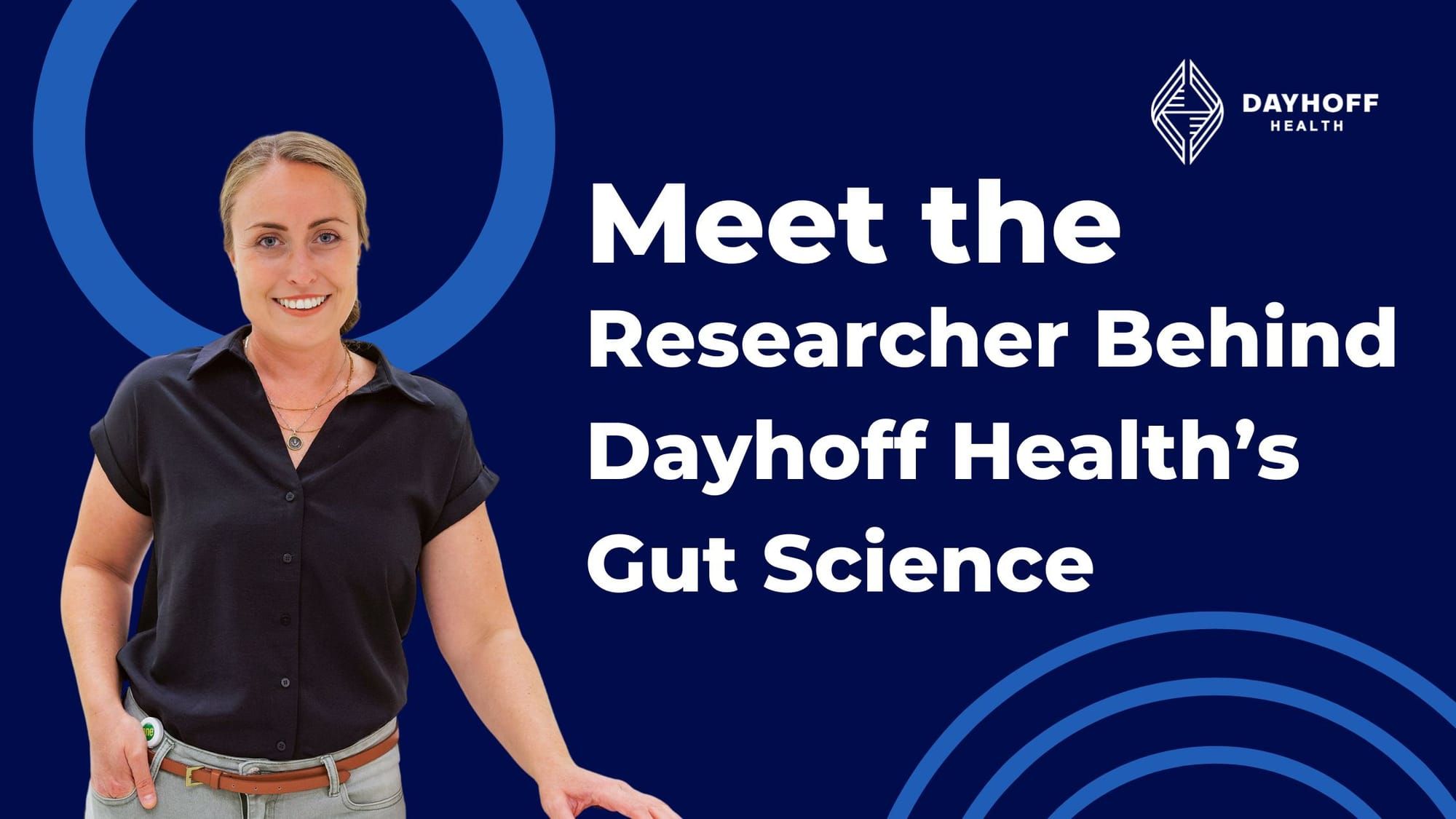
When you participate in a Dayhoff Health program, your results are backed by some of the most rigorous gut microbiome research in the world. Dr. Heather Armstrong — Canada Research Chair, Associate Professor of Gastroenterology at the University of Alberta, and Dayhoff Health Clinical Advisor — has spent her career answering the exact questions your results raise.
Who Is Dr. Heather Armstrong?
Dr. Heather Armstrong is a tenured Associate Professor in the Division of Gastroenterology at the University of Alberta, where she leads the Armstrong Lab within the Centre of Excellence in Gastrointestinal Inflammation and Immunity Research. She holds adjunct appointments in Pediatrics at the University of Alberta and in Internal Medicine at the University of Manitoba, and serves as a Canada Research Chair — one of Canada's most selective designations for researchers producing work of national and international significance.
Her lab is not a peripheral contributor to gut microbiome science. With over $25 million in active research funding supporting her team through 2030, and 17 concurrent research grants from institutions including the Canadian Institutes of Health Research, the Natural Sciences and Engineering Research Council, Crohn's and Colitis Canada, and the Weston Family Foundation, the Armstrong Lab is one of the most well-resourced microbiome research programs in North America.
When you receive your Dayhoff Health report, you are receiving science that has been validated and refined by a researcher operating at that level.
What Has Dr. Armstrong's Career Been Built On?
Dr. Armstrong's scientific foundation is unusually broad for a researcher of her specialization — and that breadth is directly relevant to what makes Dayhoff Health's program work.
She completed her MSc in Cell Biology at the University of Alberta, examining molecular chaperones and protein pathways in disease. Her PhD at the University of Adelaide and the South Australian Health and Medical Research Institute focused on the molecular mechanisms of Heat Shock Protein inhibitors in oncology — a clinical focus on how molecular biology determines therapeutic response. She then completed a fellowship at the Stollery Children's Hospital at the University of Alberta in pediatric gastroenterology and translational microbiology, with a specific focus on inflammatory bowel disease.
That arc — from molecular biology, to oncology, to gastroenterology, to microbiome science — is not incidental. It means Dr. Armstrong approaches your gut health from a systems perspective. She does not study the microbiome in isolation. She studies how the microbiome mediates everything else: immune response, metabolic function, neurological health, and disease progression across a lifetime.
What Does Dr. Armstrong's Research Actually Investigate?
The Armstrong Lab's research program spans six active areas, each of which directly informs how Dayhoff Health interprets your gut microbiome data.
The first is diet-microbiome-host interactions — specifically, how different dietary fibers are fermented by gut microbes and how unfermented fibers can, under certain conditions, promote inflammation rather than prevent it. Dr. Armstrong's landmark 2022 cover story publication in Gastroenterology, one of the highest-impact journals in medicine, demonstrated that unfermented beta-fructan fibers fuel inflammation in select patients — a finding that reframed how the research community thinks about "healthy" dietary recommendations.
The second is a series of three randomized controlled trials that are now in final phase validation of the "Precision Carbohydrate Diet (PCD)" program which has developed biomarkers of precision nutrition and is not validating the final stool targeted analysis combined with the lifestyle app to provide precision nutrition care. The trial tests whether gut microbiome biomarkers can be used to define which specific carbohydrates benefit each individual — and which produce harm. This is the direct scientific foundation for precision nutrition, the principle that your body's response to food is determined by your gut composition, not by a universal dietary guideline. It is expected to be available publicly for clinical use in 2027.
The third is gut microenvironment research — examining how changes in the internal environment of the gut, driven by diet, sleep, stress, and pharmaceuticals, alter microbial behavior and diet-microbiome interactions.
The fourth is early life microbiome science, studying how environmental exposures during pregnancy and infancy shape the gut microbiota community and long-term gut-brain health outcomes.
The fifth is lifestyle, microbiome, and community health — investigating how factors including poor sleep, mental health, and nutrition negatively affect the gut microbiome, and how targeted interventions can reduce that burden.
The sixth spans the gut-brain axis directly, with published collaborations on multiple sclerosis, neurological inflammation, and CNS damage mediated through gut microbial activity.
You are not working with a wellness program. You are engaging with a scientific platform that is grounded in the same research frameworks Dr. Armstrong publishes in peer-reviewed journals.
Why Does It Matter That Your Gut Health Program Is Backed by This Research?
The gut microbiome field is growing faster than clinical practice can absorb. Most consumer health products built around gut health draw from surface-level interpretations of research that was never designed to inform individual lifestyle decisions. The result is generic recommendations that do not account for the biological individuality that makes gut health meaningful in the first place.
Dr. Armstrong's research exists precisely to close that gap. Her lab's published work demonstrates that the same dietary fiber that benefits one person can promote inflammation in another. It demonstrates that sleep disturbance in children with inflammatory bowel disease correlates with specific alterations in intestinal microbiome composition. It demonstrates that the microbiome mediates whether your body elicits a beneficial or detrimental response to your diet and environment — not just in patients with diagnosed disease, but across healthy populations as well.
When you receive your Dayhoff Health report, you are receiving an interpretation of your gut microbiome that is grounded in this level of specificity. The markers Dayhoff surfaces are not wellness indicators. They are the same biological signals Dr. Armstrong's team and other global experts studies in clinical populations.
What Does Dr. Armstrong's Role at Dayhoff Health Mean for You?
As a Clinical Advisor to Dayhoff Health, Dr. Armstrong provides the scientific oversight that ensures Dayhoff's gut microbiome program reflects current, peer-reviewed evidence — not wellness industry convention.
Her advisory role validates three things you should care about as a program participant.
The first is scientific integrity. Dayhoff's sequencing methodology, three-sample longitudinal collection protocol, and biomarker interpretation framework are held to the same evidence standard that governs Dr. Armstrong's published research. That is a different bar than most consumer health programs are measured against.
The second is research alignment. The modifiable risk markers surfaced in your Dayhoff report map to biological systems Dr. Armstrong's lab has studied in funded, peer-reviewed clinical programs. The connection between your results and the underlying science is traceable.
The third is clinical humility. Dr. Armstrong's research has consistently demonstrated that gut health is not simple. It is not resolved by a single test, a single supplement, or a single dietary change. Dayhoff's program is designed around the same principle: longitudinal data, individual context, and ongoing refinement rather than a one-time verdict.
What Recognition Has Dr. Armstrong Received for This Work?
Dr. Armstrong's research has been recognized at every level of the academic and clinical research community.
She is the 2025 recipient of the Terry G. Falconer Memorial Rh Institute Foundation Emerging Researcher Award in Health Sciences — one of Canada's most distinguished early-career research honors. She has received Pfizer’s Women in IBD Emerging Researcher Award and the Rising Star Award from Crohn's and Colitis Canada. Her work has been designated a Global Young Academy honor for research and community commitment, and her 2022 Gastroenterology paper was featured on the journal's cover — a distinction reserved for research the editorial board considers to be among the most significant published in that issue.
Her publication record spans journals including Nature Communications, Brain, Behavior, and Immunity, Gastroenterology, and the Journal of the American College of Cardiology, with first-author and co-author contributions across myriad published studies.
That record does not exist in a vacuum. It reflects a researcher who has repeatedly submitted her findings to independent peer review and had them validated. That is the scientific foundation behind your Dayhoff Health results.
Frequently Asked Questions
Who is Dr. Heather Armstrong? Dr. Heather Armstrong is a tenured Associate Professor of Gastroenterology at the University of Alberta, a Canada Research Chair, and a Clinical Advisor to Dayhoff Health. She leads the Armstrong Lab, one of North America's most funded gut microbiome research programs, with over $25 million in active grants through 2030.
What is the Armstrong Lab? The Armstrong Lab is a research group within the University of Alberta's Centre of Excellence in Gastrointestinal Inflammation and Immunity Research. It studies how diet, lifestyle, environment, and the gut microbiome interact to influence immune health, inflammation, and disease across the lifespan.
What is a Canada Research Chair? A Canada Research Chair is a federally designated research appointment awarded to researchers who are recognized as world-class leaders in their fields. Tier 2 chairs are awarded to emerging researchers with demonstrated potential to lead their field internationally.
What is the gut microbiome? The gut microbiome is the community of trillions of bacteria, fungi, viruses, and other microorganisms living in your digestive tract that directly influence digestion, immune function, metabolism, and brain activity.
What does Dr. Armstrong's research mean for my Dayhoff Health results? Dr. Armstrong's research provides the scientific framework that informs how Dayhoff interprets your gut microbiome data. Her published work on diet-microbiome interactions, personalized nutrition, and gut-brain health ensures that Dayhoff's program reflects current clinical evidence rather than generalized wellness conventions.
Why is peer-reviewed research important in gut health? Peer-reviewed research is independently evaluated by other scientists before publication, ensuring that findings meet a validated evidence standard. Most consumer gut health products are not held to this standard. Dayhoff's clinical advisory board, including Dr. Armstrong, ensures that Dayhoff's program is.
What is inflammatory bowel disease (IBD)? Inflammatory bowel disease is a term covering chronic inflammatory conditions of the digestive tract, including Crohn's disease and ulcerative colitis, and is one of the primary clinical areas in which Dr. Armstrong's gut microbiome research is applied. Dr. Armstrong herself has IBD which further illustrates her commitment towards improving accurate clinical outcomes.
Dr. Heather Armstrong serves as a Clinical Advisor to Dayhoff Health. Individual program results are delivered directly to participants. No individual health information is shared with employers or third parties.