
Why Weight Often Returns After You Stop a GLP-1

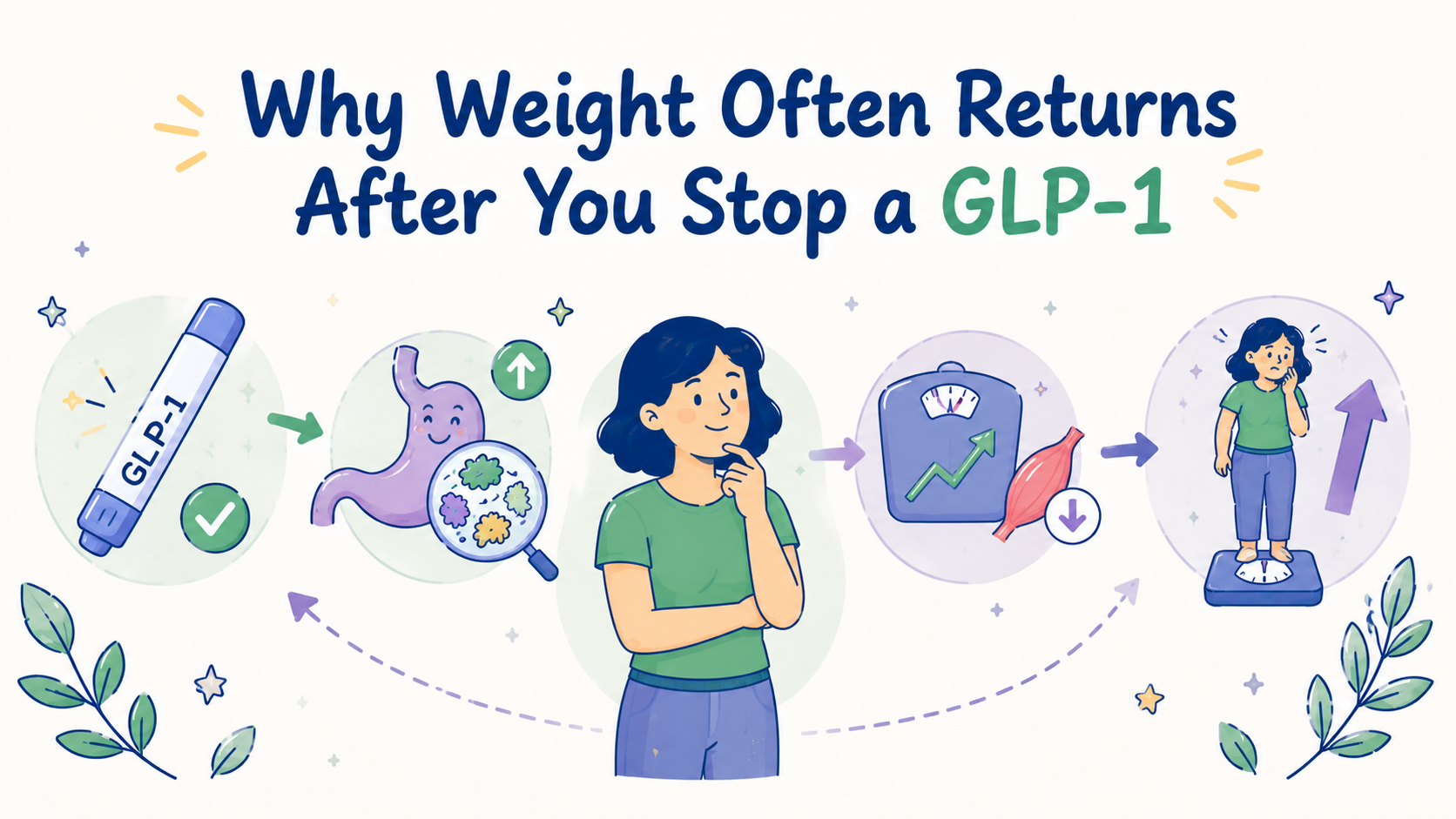
When people stop taking a GLP-1, research shows many of the metabolic effects start reversing within weeks, and weight often returns while lost muscle mass does not. That is biology responding to a drug leaving the system. Willpower has little to do with it. Your gut microbiome is one measurable piece of the picture.
For most people, the hardest stretch of a GLP-1 is the very beginning. Those first weeks and months are when your body changes the most, and they set the pattern for everything that follows, which is why a baseline reading and frequent analysis through the early months matter so much, while you can still see how your body is responding in real time. In earlier posts we covered how much shifts when you start: the gut microbiome, organ systems, muscle mass, and more. The other hard part comes after you stop, when the appetite can return louder than before, the scale moves the wrong way, and people tell themselves they blew it. The research tells a different story, and it involves much more than your lifestyle and habits.
What is metabolic rebound?
Metabolic rebound is the term for the body drifting back toward its earlier patterns once a weight-related intervention ends. With GLP-1 medications, studies show many of the metabolic benefits begin reversing within weeks of stopping. The drug was doing ongoing work. Take it away without significant lifestyle changes, and the underlying biology, the hunger signals, the slower digestion, reasserts itself.
Why does this happen so fast?
These medications manage appetite and digestion while they are in your system. They do not permanently rewire the systems they act on. So the reversal is not a sign that anything failed. It is what you would expect when you remove something the body had adapted around.
Where does the gut fit in?
Here is the part that gets left out of most conversations. Research links an imbalanced gut microbiome with a greater tendency toward weight gain. The microbiome influences how you extract energy from food, how full you feel, and how your metabolism behaves day to day. The relationship runs both ways, your habits shape your gut and your gut shapes your responses, so it is one input among several. But it is an input you can actually measure.
What does measuring your microbiome tell you?
A measurement instead of a mystery. The Gut Microbiome Program from Dayhoff Health sequences your gut to show the balance and variety of bacteria you are carrying and how healthy and functional they are. If you are tapering off a GLP-1 or already have, that gives you and your clinician a concrete view of one biological factor in play, rather than a vague sense that your body is working against you.
The weight returning is data, not a verdict on you. And data is something you can work with.
Frequently Asked Questions
Why does weight return after stopping a GLP-1?
The medication manages appetite and digestion while in your system; once the drug leaves, the underlying biology returns, and research shows metabolic effects reverse within weeks.
Is regaining weight a sign of failure?
No. It reflects biology responding to the absence of the drug. But it can also reflect that specific lifestyle changes tailored to your body and your microbiome could be made to maintain the effects longer-term.
How is the gut microbiome connected?
An imbalanced microbiome is associated with a greater tendency toward weight gain and influences how the body handles food and fullness.
Can microbiome analysis help me plan?
Yes. It gives you and your clinician a measurable view of your gut as one factor, supporting an informed conversation about how your body responds to GLP-1s.