
The Gut-Brain Connection, Explained in Plain Language

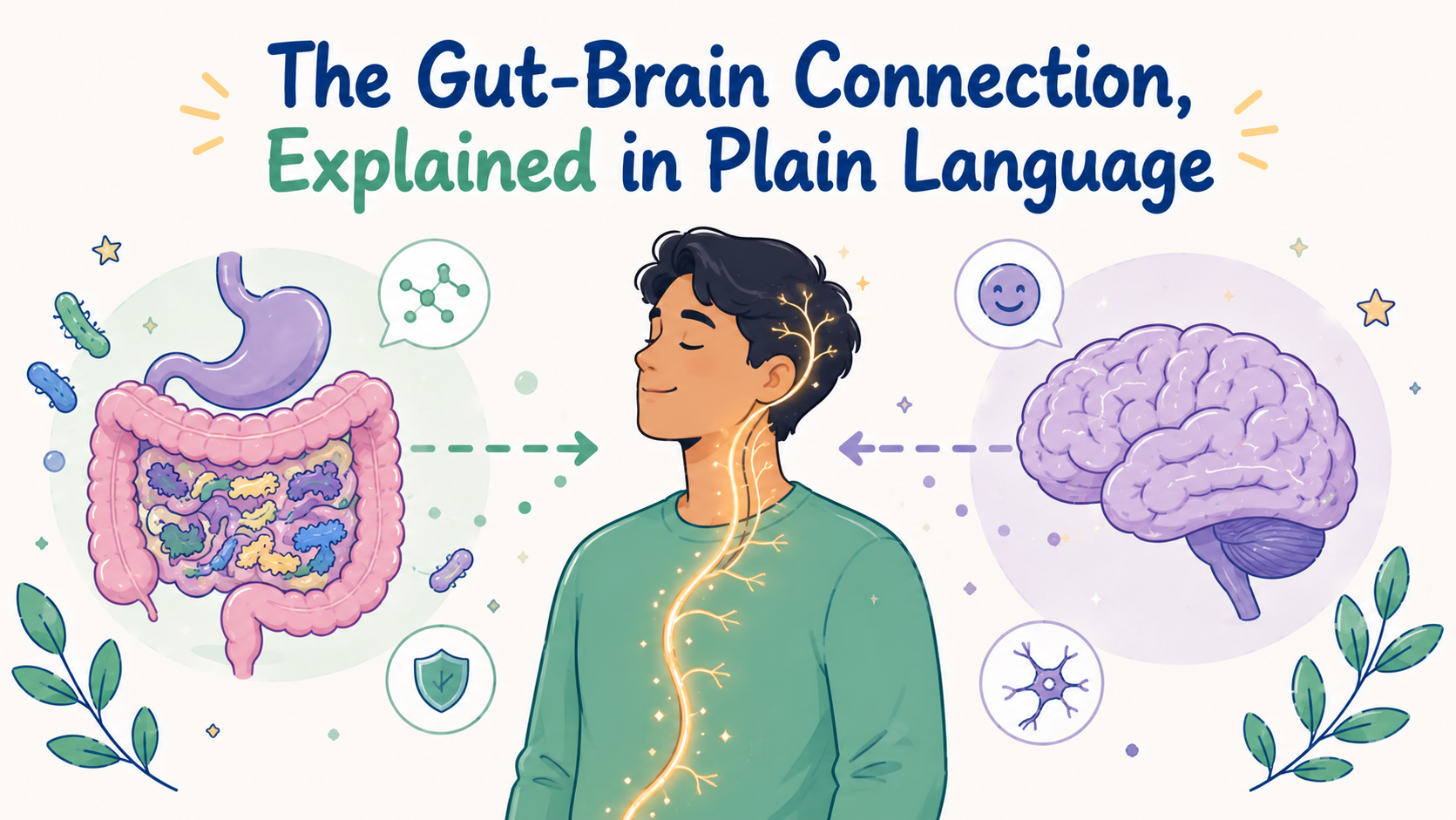
The gut and brain stay in constant conversation through the vagus nerve, chemical messengers made by gut microbes, and the immune system. That two-way line, called the gut-brain axis, helps explain why gut health shows up as mood, focus, and energy, not only digestion.
Anyone who has felt their stomach drop before a big event or bad news already knows the gut and brain are wired together. The science behind that gut feeling is more literal than most people realize, and it runs in both directions.
What is the gut-brain axis?
The gut-brain axis is the two-way communication network connecting your digestive system and your brain. There are physical pathways carrying signals back and forth all day, and a surprising share of them start in your gut microbiome.
How does the gut send messages to the brain?
Three main routes. The vagus nerve, a long nerve running from the brainstem down through the gut, acts like a direct phone line. Gut microbes also produce hormones and neurotransmitters, the same kinds of chemical messengers the brain uses, including ones tied to mood and calm. And the immune system gets involved, with gut-based immune cells influencing inflammation that the brain feels. Three channels, all active, all shaped by which microbes you are hosting.
What does food have to do with it?
Quite a bit. Researchers studying what has been called a psychobiotic diet, an eating pattern heavy on fruits, vegetables, grains, legumes, and fermented foods, have found people following it report more reduced stress. The logic tracks. Feed the beneficial microbes that produce calming compounds and you tilt the chemistry in a useful direction. The diet reaches the brain by working on the gut first.
Could my brain fog start in my gut?
For some people, yes, it is worth considering. Foggy thinking, low mood, and flat energy get blamed on sleep or stress, and sometimes that is right. But when those things are dialed in and the fog stays, the gut is a reasonable place to look. The Gut Microbiome Program from Dayhoff Health sequences your microbiome to show which bacteria and other microbes are present and active, including the groups linked to producing these messenger compounds. That turns a vague complaint into something specific you can examine with information about how you can start to fix it at home.
The brain gets all the credit for how you feel. A lot of the raw material comes from lower down.
Frequently Asked Questions
What is the gut-brain axis?
It is the two-way communication network linking the gut and brain through nerves, microbial chemicals, and the immune system.
Can gut bacteria affect mood?
Research shows gut microbes produce neurotransmitters and signals that influence mood, stress, and mental clarity.
What is a psychobiotic diet?
It is an eating pattern rich in fruits, vegetables, grains, legumes, and fermented foods, associated with reduced stress.
Where do I start if I want to understand my gut health?
A clear picture of what is in your gut is the place to begin. The Gut Microbiome Program from Dayhoff Health reads your microbiome and shows you the microbes you carry, giving you a baseline to learn from and revisit over time.