
GLP-1s and Nutrient Gaps: The Quiet Side Effect

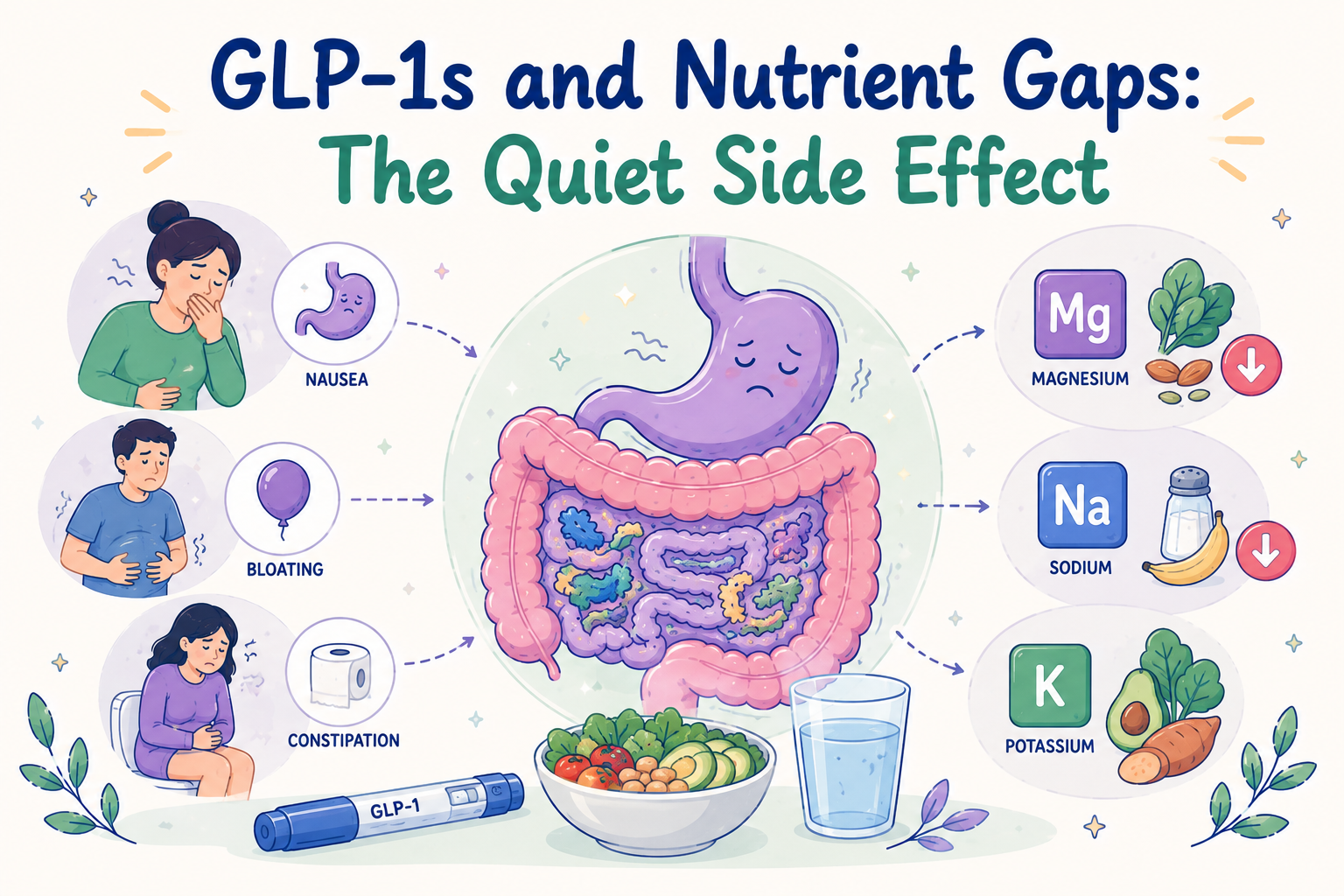
GLP-1 medications can cause nausea, bloating, and constipation, and when combined with eating less, that can leave nutritional deficiencies. Losing weight and being well-nourished are separate things. Your gut's ability to absorb is where the two meet.
The weight conversation around GLP-1 medications is loud. The nutrition conversation barely happens. That is a problem, because the two are separate matters, and the gap between them is where people quietly run into trouble.
What are the digestive side effects of GLP-1s?
Nausea, bloating, and constipation are common companions to these medications. For many people they ease over time. While they are present, they change how much someone eats and drinks, and they change how comfortably the digestive system is running.
How do those lead to nutrient gaps?
Two forces stack up. Less appetite means less food coming in, so fewer nutrients arrive in the first place. And the side effects themselves can contribute to losing key electrolytes and micronutrients, with vitamin D, iron, B vitamins (especially thiamine and B12), calcium, and protein among the ones research flags. A micronutrient is a vitamin or mineral your body needs in small amounts to function. Small amounts, big consequences when they run short.
Why isn't eating less the whole story?
What you eat is only half the question. The other half is how much your body absorbs from it. Reduced food and fluid intake, a gut working through side effects, and shifting digestion together move the challenge from intake to absorption. Someone can be losing weight on schedule and still come up short on the building blocks their body runs on. This malnutrition and poor absorption are reasons why many people experience muscle wasting (sarcopenia).
How does the gut tie it together?
Your gut does the absorbing, and the microbes in your gut play a role in breaking food down and making nutrients available. Knowing your gut's functional state, how well it is set up to do that work, is the starting point for closing any gaps. The Dayhoff Health Gut Map sequences your microbiome to show what is living there and what those microbes are equipped to do. Bring that summary to your clinician or dietitian, and the conversation about nutrition gets more specific instead of generic.
Weight is the number everyone watches. Nutrition is the part that keeps you functioning while the number moves. It deserves the same attention.
Frequently Asked Questions
Do GLP-1 medications affect nutrition?
They can. Reduced appetite and digestive side effects can lower intake, absorption, and contribute to nutrient depletion.
Which nutrients are commonly affected?
The most commonly deficient nutrients are vitamin D, iron, B vitamins (especially thiamine and B12), calcium, and protein. (PMID: 41549912)
Does losing weight mean I'm well-nourished?
Not necessarily. The two are separate, and absorption is the link between them.
How can sequencing help?
The Dayhoff Health Gut Microbiome Program shows your gut's functional state, giving your clinician specifics to work from.