
Your Gut Has a Mood, and It Is Influencing Yours

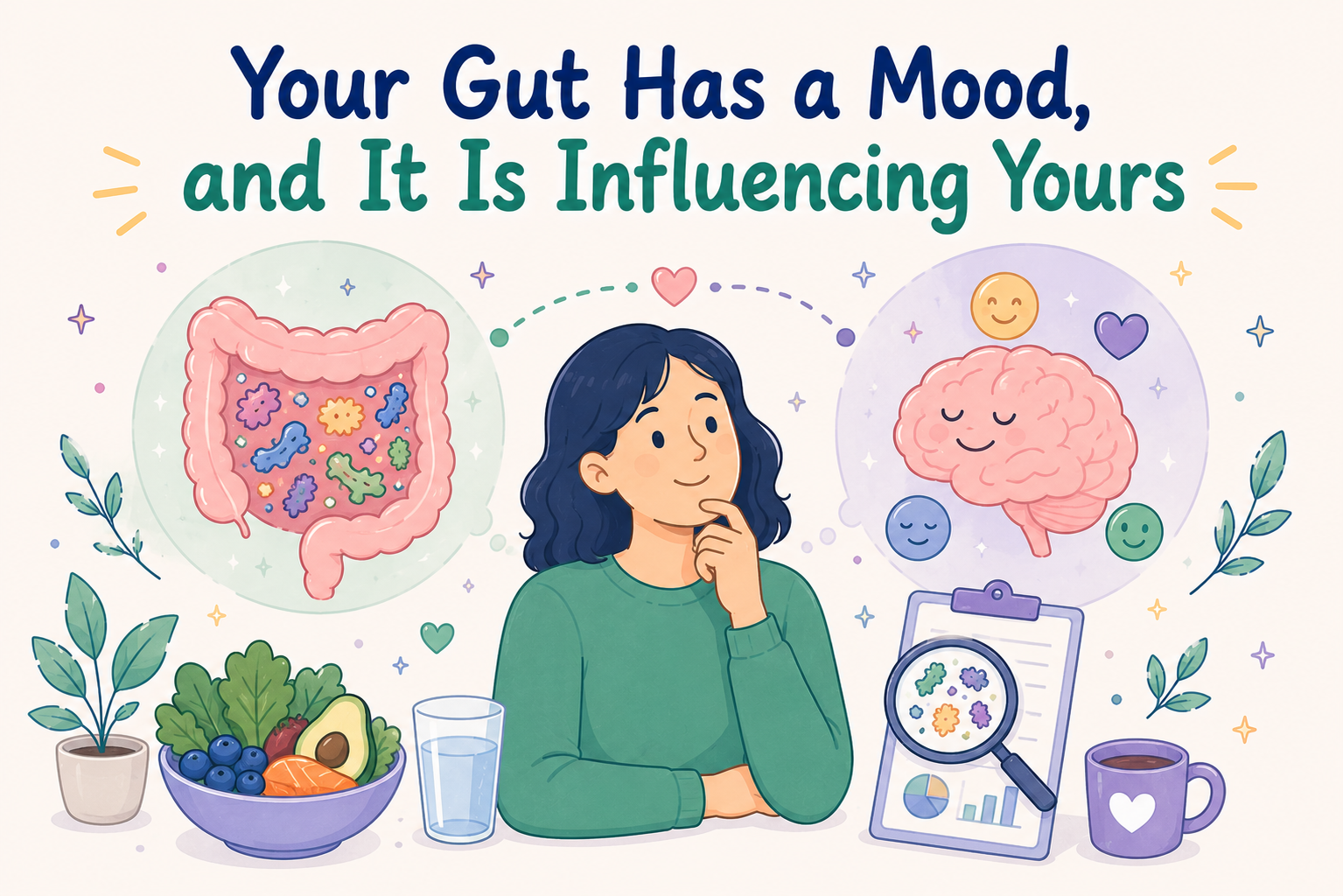
Studies link the makeup of your gut bacteria to mood, stress, and emotional wellbeing. People with depression tend to carry lower levels of certain microbes, and diets that feed helpful bacteria are tied to lower stress. Your gut is one measurable part of how you feel.
For years, the strongest stories about gut bacteria and mood came out of animal labs. That is no longer where the action is. Some of the most convincing evidence now comes from studies of people, thousands of them, and it keeps landing on the same point: the mix of microbes in your gut tracks with how you feel.
What does the research in people actually show?
Researchers in Belgium sequenced the gut bacteria of more than 1,000 people in the Flemish Gut Flora Project and matched the results against quality of life and clinical depression. Two groups of bacteria, Coprococcus and Dialister, turned up at lower levels in people with depression, and the pattern held even after accounting for antidepressant use. The same study tied butyrate-producing bacteria to higher quality-of-life scores. Those findings were then checked against a second group of roughly a thousand more people, and they held.
Reviews that gather the wider human literature describe the same theme. Imbalances in gut bacteria, what scientists call dysbiosis, show up alongside anxiety, depression, and stress-related conditions across study after study. Early experiments that moved gut bacteria into animals first hinted that the gut could shape behavior. The human work has since caught up, and it now carries most of the weight.
How can bacteria reach your mood?
The gut and brain talk to each other constantly along the gut-brain axis, a two-way line of communication running between your digestive system and your head. Gut bacteria join that conversation in a few concrete ways. They produce short-chain fatty acids, the compounds made when microbes break down fiber, and these influence inflammation and signaling the brain registers. They also help make and trigger neurotransmitters, the chemical messengers the brain runs on, including GABA, which is tied to a sense of calm, and metabolites of dopamine. The Belgian study found that a microbe's capacity to produce a dopamine-related compound lined up with better mental quality of life. When the bacterial mix shifts, the chemistry heading toward the brain shifts with it.
Can a single gut bacterium really matter?
Sometimes a specific microbe stands out. A 2025 study zeroed in on Morganella morganii, a gut bacterium that earlier human data had connected to major depression. The researchers found that it produces unusual fat-like molecules that set off a pro-inflammatory immune response, and they described a probable causal link between higher levels of this bacterium and depression in the people studied. One bacterium is not the whole story, and inflammation is one of several routes the gut uses to reach the brain. What the work shows is how specific and physical these connections can get.
Does what I eat change anything?
There is human evidence here too. In a randomized study, 45 healthy adults followed either a diet rich in fermented and high-fiber foods or their usual eating pattern for four weeks. The group on the fermented-and-fiber diet reported lower perceived stress by the end, and the people who stuck to it most closely saw the largest drops. Reviews of the broader literature point the same way, connecting certain dietary patterns to support for mood and stress through their effect on gut bacteria. Feeding the microbes that produce helpful compounds gives the gut-brain conversation better material to work with.
Where does Dayhoff Health fit?
Knowing what is actually in your gut turns a vague sense of how you feel into something specific. The Gut Map from Dayhoff Health uses shotgun metagenomic sequencing, which reads the DNA of the microbes in your sample to show which bacteria are present and active, including many of the groups this research connects to mood and stress. For someone tending to their mental wellness on purpose, that is a piece of the picture that usually stays hidden. The program supports general wellness and does not diagnose or treat any condition, so it works best alongside a clinician or mental health professional you trust.
Your mood has more than one author. A growing body of human research says some of them live in your gut.
Frequently Asked Questions
Is the gut-mood link only shown in animals? No. Recent human studies, including a population cohort of more than 1,000 people, link gut bacteria to mood and depression.
Which bacteria are connected to mood? Research has tied lower levels of microbes such as Coprococcus and Dialister to depression and connected others to stress and quality of life.
Can changing my diet affect stress? In a randomized study of healthy adults, a diet rich in fermented and high-fiber foods was associated with lower perceived stress, with greater reductions among those who followed it most closely.
Does Dayhoff Health treat depression or anxiety? No. The program supports general wellness and does not diagnose or treat any condition, and it works best alongside a professional you trust.
References
- Valles-Colomer M, et al. The neuroactive potential of the human gut microbiota in quality of life and depression. Nat Microbiol. 2019. PMID: 30718848.
- Xiong RG, et al. The Role of Gut Microbiota in Anxiety, Depression, and Other Mental Disorders as Well as the Protective Effects of Dietary Components. Nutrients. 2023. PMID: 37513676.
- Rathore K, et al. The Bidirectional Relationship Between the Gut Microbiome and Mental Health: A Comprehensive Review. Cureus. 2025. PMID: 40255763.
- Vine J, et al. Unusual Phospholipids from Morganella morganii Linked to Depression. 2025. PMID: 39818770. (journal citation to confirm)
- Berding K, et al. Feed your microbes to deal with stress: a psychobiotic diet impacts microbial stability and perceived stress in a healthy adult population. Mol Psychiatry. 2023. PMID: 36289300.