You Started Ozempic or Mounjaro. Here’s What Is Happening Inside Your Gut Right Now.

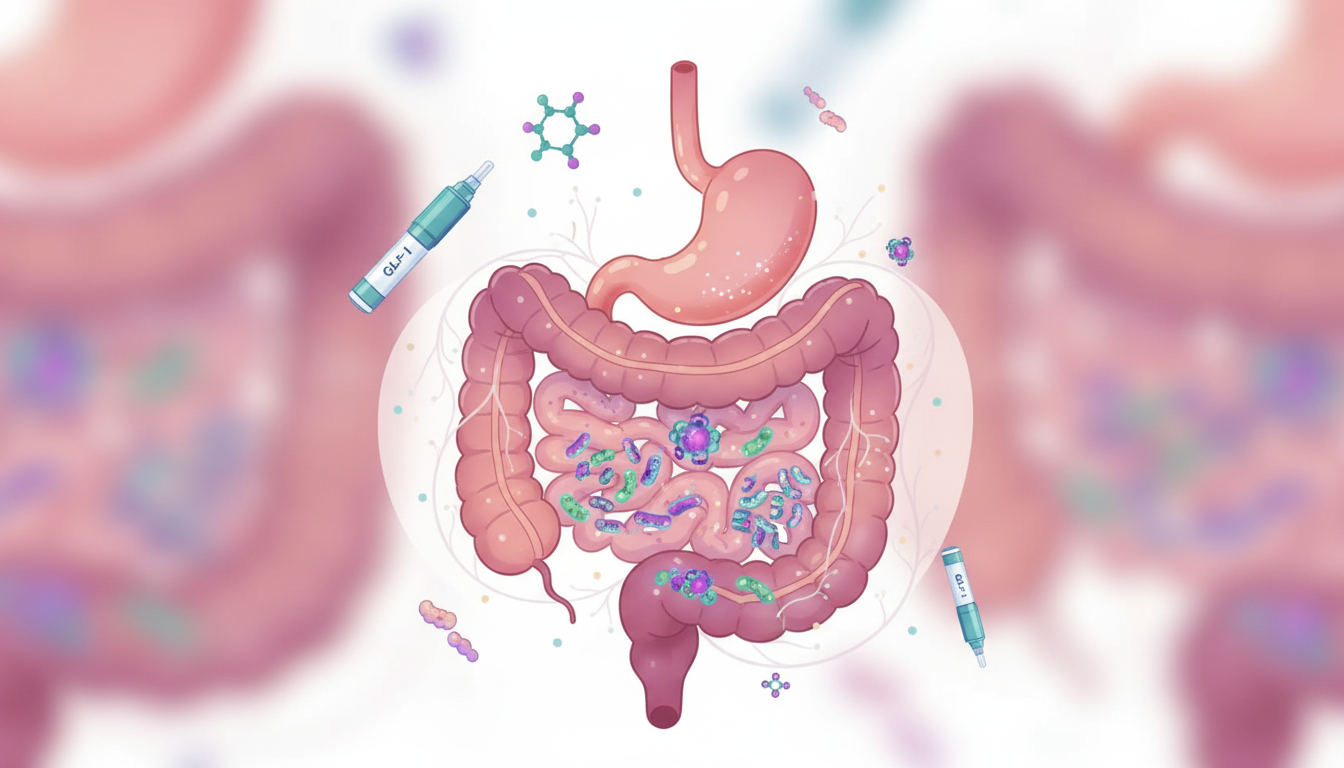
GLP-1 medications like Ozempic and Mounjaro slow gastrointestinal motility at all levels of the gut, like how fast your stomach empties, and that change reshapes the community of bacteria and other microbes that live in your gut. While many people will experience growth of healthy gut microbes, some people experience overgrowth of certain unhealthy microbes and decreased diversity of the different types of gut microbes. Gut microbiome analysis shows which way yours is heading, something a prescription cannot tell you.
The first week on a GLP-1 medication, most people notice the obvious stuff. Less appetite. Food sits longer. You feel full off half a plate. What you cannot feel is the quieter thing happening lower down, where trillions of bacteria are reacting to a gut that suddenly runs on a different schedule.
What happens to your gut when you start a GLP-1?
Your gut microbiome is the community of bacteria, fungi, and other microbes living mostly in your large intestine. These drugs slow gastrointestinal motility, including gastric emptying, which is the speed at which food leaves your stomach and moves into your intestines. When the pace of food and other substances through the stomach and the rest of the gut changes, the environment your microbes live in changes with it. Different food timing, different moisture, different fuel arriving at different points. The microbes respond.
Why does slower digestion change your bacteria?
Microbes typically eat what you eat, or more precisely, they eat what reaches them. Slow the delivery of food to your microbes and you reward some species over others. For some people, the environment of the gut remains healthy and enough food reaches the gut to fuel beneficial microbes. In contrast, some people hyper-restrict food intake, experience overly decreased gut motility, and rapid changes in the gut environment that allow select detrimental microbes to take over the gut microbiome community. Researchers have watched this play out. For example, a microbe called Akkermansia muciniphila, which lives in the gut lining and is tied to a healthier metabolism, becomes more plentiful in some people. That part tends to make the headlines. However, this microbe eats the mucus barrier of the gut and thus, if it becomes too abundant it can reshape the surrounding microbiome and allow harmful microbes to thrive. This is why it is important to not only test which microbes are in your gut, but understand how the different microbes interact, and what they are all doing to impact you and your health.
Is the change in microbiome good or bad?
Here is where it gets less tidy. While some studies show that weight loss and beneficial changes from GLP-1s can improve the gut microbiome in certain people, other studies show a drop in microbial diversity, meaning fewer distinct types of bacteria overall. Diversity matters because a varied microbiome tends to be a more resilient one. So the same class of drug can nudge one person's gut toward something promising and leave another person with a thinner community or unhealthy overgrowth of select types of microbes. The average from a clinical trial will not tell you which of those is happening inside you or how your body will personally respond.
What can you actually do about it?
You can look. The Gut Microbiome Program from Dayhoff Health uses CLIA-certified laboratory methods like shotgun metagenomic sequencing, a method that reads the DNA of the microbes in a stool sample to identify what is living there and in what amounts. That gives you a picture of your own gut while it is adjusting, drawn from your personal sample, rather than someone else's. From there you and your clinician have something real to work with: which microbes are thriving, which you are lacking, where the gaps sit and they mean for your health.
A prescription does its job. It just does not come with a window into this part of your body. The window is worth having.
Frequently Asked Questions
Does my microbiome health before starting GLP-1 medications matter?
Yes. Knowing how important the health of your gut microbiome is to not only your gut, but almost all of your organ systems, you want to ensure you have the healthiest gut microbiome possible before beginning GLP-1 medications. This can improve the resilience of your gut microbiome so that it is less likely to be negatively impacted by your medications, and is more likely to help you to gain the best results with GLP-1s.
Do GLP-1 medications change the gut microbiome?
Yes. They slow gut motility and gastric emptying, which alters the conditions gut microbes live in, and studies report both increases in certain beneficial microbes or overgrowth of non-beneficial microbes and reductions in overall diversity, depending on the person.
Which bacteria are affected by GLP-1 drugs?
Research points to changes in many different microbes such as Akkermansia muciniphila, along with shifts in the broader balance and variety of species.
Can I see how my own gut is responding?
Yes. The Gut Microbiome Program from Dayhoff Health sequences your sample to show which microbes are present and in what amounts.
When should I look at my microbiome on a GLP-1?
Many people choose to sequence early, so they have a baseline while their digestion is adjusting. The most important windows include getting a baseline prior to starting to see if you have a healthy microbiome that will support a more successful response to treatment, and monthly testing over the first 3-6 months.