
Why No Two Gut Microbiomes Are the Same

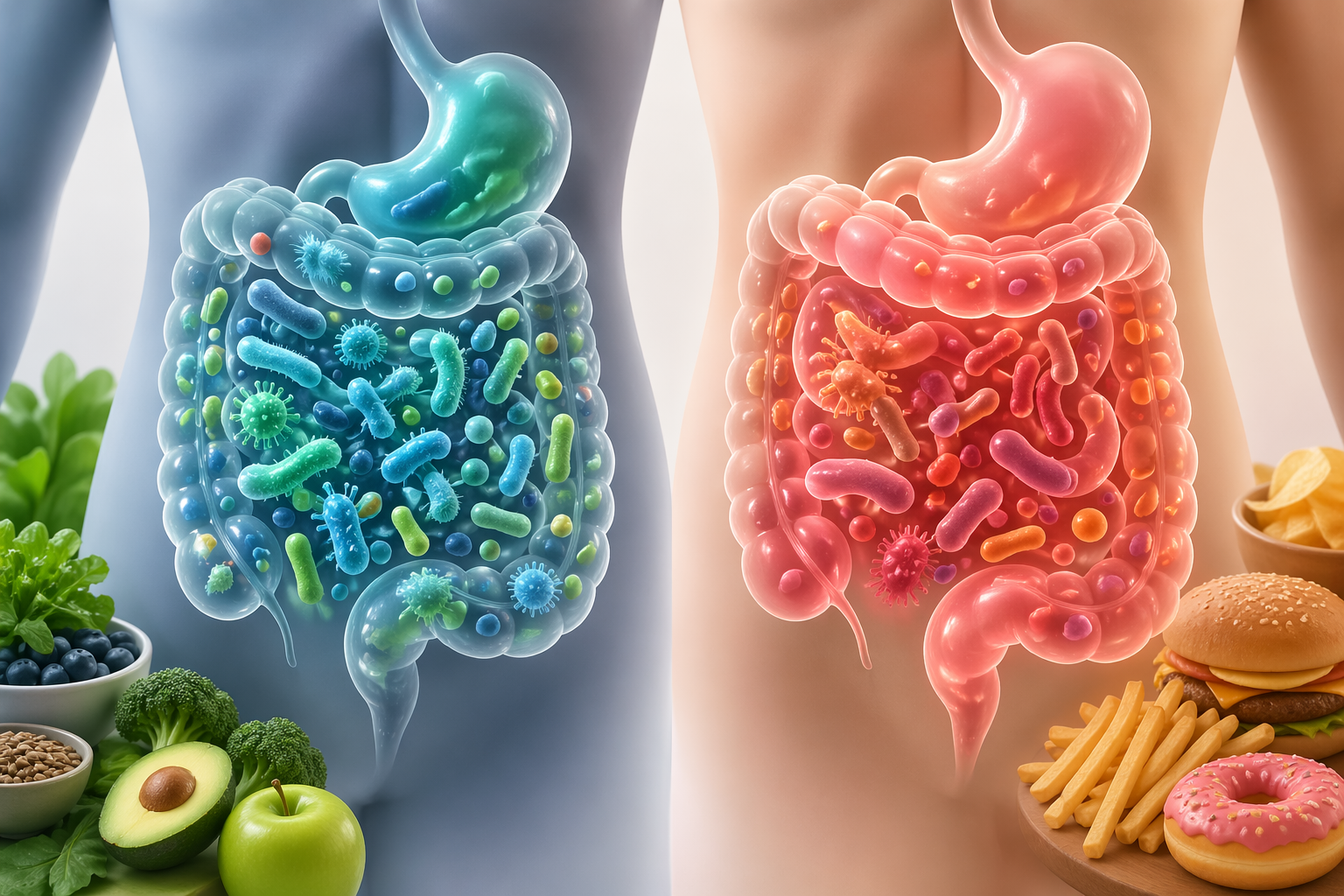
No two gut microbiomes are identical because each one is shaped by a different combination of birth history, diet, environment, medication exposure, immune system configuration, and daily habits. Even identical twins carry distinct microbial communities. Your microbiome is a biological record of your life.
What Is the Gut Microbiome?
The gut microbiome is the collective community of trillions of microorganisms — including bacteria, fungi, viruses, and archaea — living in the digestive tract. It plays a direct role in digestion, immune regulation, metabolic function, inflammation, and gut-brain signaling. While every person carries this community, the exact composition, balance, and functional output of that community is shaped by individual biology and lived experience — making it as unique as a fingerprint.
Why Is Every Person's Gut Microbiome Different?
Your microbiome is a cumulative record of your life history. Every significant biological event and environmental exposure leaves a measurable imprint on your microbial community. The factors that drive individual variation include:
Birth method and early feeding. The microbes you first encounter at birth — and whether you were breastfed or formula-fed — establish the founding population of your gut community. These early colonies set patterns that influence microbial composition for years.
Diet. Different foods selectively feed different microbial populations. A diet rich in diverse plant fibers supports a wider range of fiber-fermenting species. A diet low in fiber narrows that community. Long-term dietary patterns are among the strongest predictors of microbiome composition in adults.
Geographic environment. The soil, water, climate, pets, and people in your immediate environment all introduce microbes that shape your gut community over time. People living in the same household tend to share more microbial overlap than strangers — but even cohabitants maintain distinct individual profiles.
Medication history. Antibiotics are the most significant pharmacological influence on the microbiome. A single course can eliminate entire microbial populations, with recovery taking months and, in some cases, never fully returning to the prior baseline. Other medications — including proton pump inhibitors, metformin, and certain antidepressants — also have documented effects on microbial composition.
Immune system configuration. Your immune system actively regulates which microbes are permitted to establish themselves and at what abundance. Because immune system architecture varies between individuals, so does the microbial community it shapes.
Stress and sleep. The gut and brain communicate continuously through the gut-brain axis — a bidirectional network of neural, hormonal, and immune signaling pathways. Chronic stress and disrupted sleep alter that signaling in ways that measurably affect microbial composition and gut barrier function.
Physical activity and daily routine. Consistent physical activity is associated with greater microbial diversity. Regular daily routines — consistent meal timing, sleep schedules, and movement patterns — support microbial community stability over time.
No two people have lived the same life; therefore, no two microbiomes end up the same.
Does Genetics Determine Your Gut Microbiome?
Genetics plays a role but is not the primary driver. Studies of identical twins — who share nearly all their DNA — consistently show that their gut microbiomes diverge significantly over time as their diets, environments, medications, and life experiences differ. Genetic factors influence gut pH, mucus composition, enzyme production, and immune system architecture — all of which shape the conditions microbes inhabit. But those conditions are continuously modified by behavioral and environmental inputs that genetics does not determine.
The result is a microbial ecosystem that is uniquely tuned to each individual — shaped by biology but written by experience.
Does the Gut Microbiome Change Over Time?
Yes, continuously. The gut microbiome is a dynamic system that responds to daily inputs. A fiber-rich meal can shift microbial activity within 24 hours. A course of antibiotics can reshape community composition within days. A period of sustained stress, disrupted sleep, or travel introduces new pressures that alter which species are most active.
These short-term fluctuations are normal and expected. They are also precisely why a single microbiome sample — taken on one day, under one set of conditions — cannot reliably represent your true biological baseline. The patterns that matter for health are the ones that persist across daily variation, not the ones that appear on a single morning.
What Does Microbiome Individuality Mean for Gut Health?
Because every microbiome is different, health cannot be defined against a universal microbial standard. There is no single species composition that all healthy people share. What defines a healthy microbiome is not which organisms are present but whether the community is performing its core functional roles: fermenting fiber into short-chain fatty acids, maintaining the gut barrier, regulating immune activity, and supporting metabolic function.
Two people with very different microbial communities can both have healthy, well-functioning guts. Two people with similar species profiles can have meaningfully different functional outputs. Function — what your microbes are doing — matters more than composition alone.
This is why personalized microbiome assessment produces more meaningful insights than comparison against a generic population average.
How Does Dayhoff Health Account for Microbiome Individuality?
Dayhoff Healthmicrobial patterns that are consistent across your baseline — not just what was present on a single collects three samples over the course of one week rather than relying on a single collection point. This captures daily variation, smooths out transient fluctuations, and identifies the microbial patterns that are consistent across your baseline — not just what was present on one particular day.
Shotgun metagenomic sequencing identifies organisms at the species and strain levels and reveals the functional pathways they contribute, not just a genus-level inventory of who is present, but a functional picture of what your specific community is doing. Findings are interpreted against your own baseline rather than a fixed population ideal, yielding insights relevant to your biology and lifestyle rather than a reference profile built from someone else's data.
Frequently Asked Questions
Why is everyone's gut microbiome different? Each person's gut microbiome is shaped by a unique combination of birth history, diet, environment, medication exposure, immune system configuration, stress, sleep, and physical activity. Because no two people share the same combination of these factors over a lifetime, no two microbiomes end up identical — even among identical twins.
Do identical twins have the same gut microbiome? No. Despite sharing nearly identical DNA, identical twins develop distinct gut microbiomes over time as their diets, environments, medications, and life experiences diverge. This demonstrates that lived experience shapes microbiome composition at least as powerfully as genetics does.
What is the gut-brain axis? The gut-brain axis is a bidirectional communication network between the gut microbiome and the brain, operating through neural, hormonal, and immune signaling pathways. Gut microbial composition influences neurotransmitter production, stress response, and mood regulation — and brain activity influences gut motility and microbial balance in return.
Can the gut microbiome change permanently? Some changes — particularly those caused by antibiotic exposure early in life or repeated courses over time — can have lasting effects on microbiome composition. Most daily fluctuations are temporary. Sustained dietary and lifestyle changes produce the most reliable long-term shifts in microbial community structure.
Why does a single gut microbiome sample produce unreliable results? The gut microbiome shifts daily in response to food, sleep, stress, and medication. A single sample reflects one moment in that ongoing fluctuation. Without multi-day collection, there is no way to distinguish a stable biological pattern from a transient daily variation — making individual findings unreliable for clinical or behavioral interpretation.
What is shotgun metagenomic sequencing? Shotgun metagenomic sequencing reads all the genetic material in a sample rather than a single marker gene. It identifies organisms at the species and strain level — including bacteria, fungi, viruses, and archaea — and reveals the functional pathways those organisms contribute, providing a complete picture of what your microbial community is doing, not just who is present.