
Can Your Gut Age Faster Than the Rest of You? New Research Says Yes

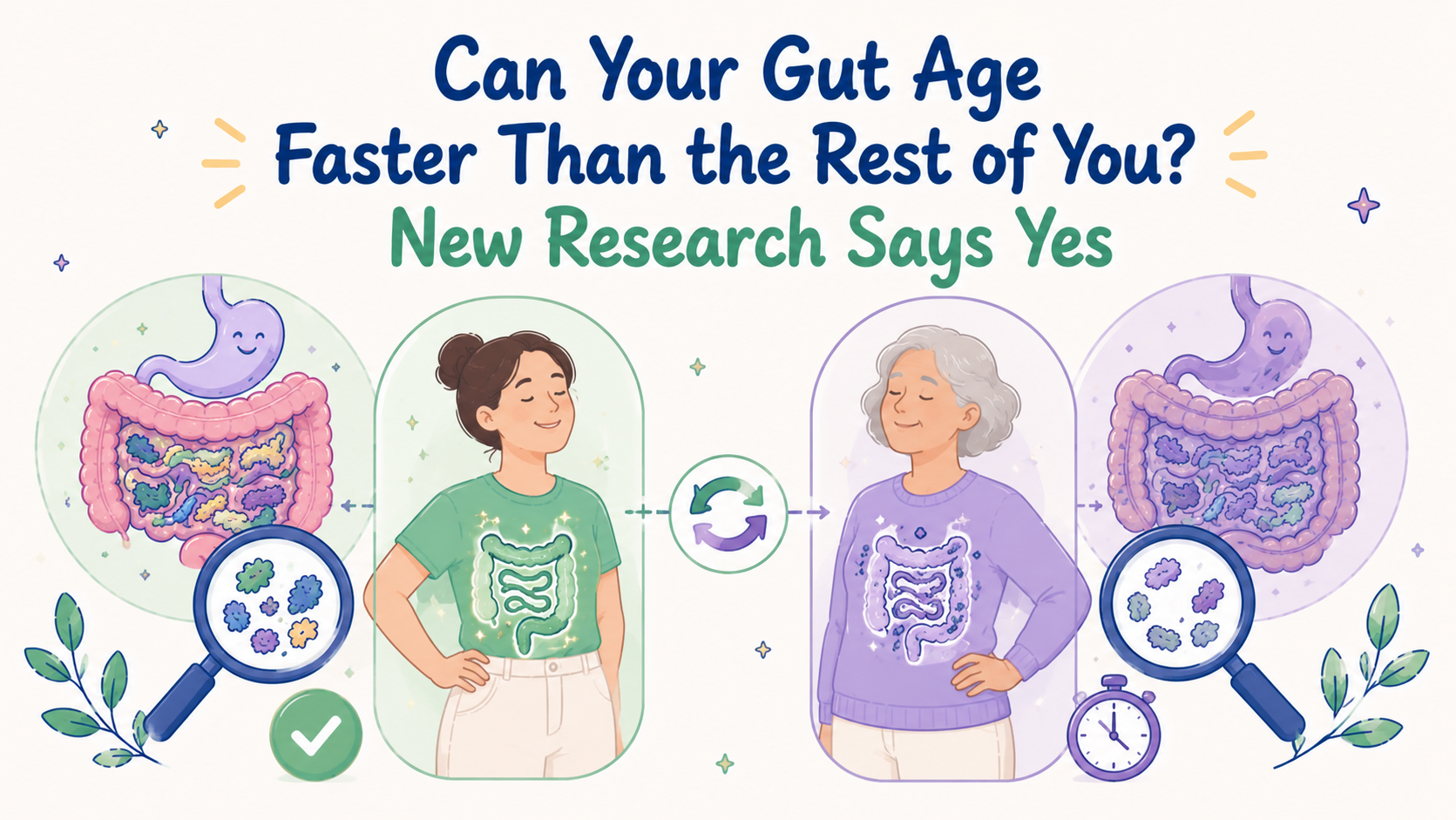
People who live to 100 tend to carry distinctive, youthful gut microbiomes, a pattern found across many human studies. New animal research adds the missing piece: when older mice were given back their own younger gut microbes, several markers of aging were reversed. Together they place the microbiome in the longevity conversation.
Look at the people who make it past 100 in good shape, and a strange thing keeps turning up in their stool samples. Their gut bacteria look younger. Researchers have seen it across countries and study after study, and a 2026 animal experiment finally started to explain what it might mean.
What do we see in the people who live the longest?
Centenarians, people who reach 100 or beyond, have become the favorite model for studying healthy aging, for a simple reason. They reach extreme old age while sidestepping much of the illness that usually arrives with it. When scientists sequence their guts, the same themes keep surfacing.
A 2023 study examined 297 centenarians from Guangxi, China, alongside more than a thousand younger people. The centenarians' microbiomes carried what the researchers called youth-associated signatures: more even communities of bacteria, a larger share of beneficial groups, and fewer of the opportunistic microbes that tend to creep in with age.
A 2021 study found that centenarians were enriched in bacteria that produce a distinctive set of bile acids, compounds with antimicrobial activity that appear to help hold harmful microbes in check. Work from a longevity study in southern China added another piece, reporting that centenarians carried higher microbial diversity and a stronger antioxidant capacity, with beneficial Lactobacillus strains the team could isolate and grow in the lab. Review papers that pull this whole literature together describe the same arc across the lifespan and point to the centenarian gut as a kind of biomarker for aging well.
What did the animal research add?
Human studies like these have a built-in limit. They are associative, meaning they can show that a youthful gut and a long life travel together, and they cannot tell you which one is steering. Maybe the microbes help these people age well. Maybe aging well shapes the microbes. The data on its own cannot separate the two.
That is the gap a 2026 study presented at Digestive Disease Week started to close. Researchers took older mice and gave them back their own gut microbes from when they were young. Restoring that younger community produced effects throughout the body, with reversals in several core features of aging.
What does reversing aging mean here?
The researchers reported movement in specific markers: inflammation, fibrosis, which is the stiffening and scarring of tissue, mitochondrial decline, meaning the energy factories inside cells working less efficiently, telomere attrition, the shortening of protective caps on DNA, and DNA damage. These usually move one direction as an animal ages. Seeing several of them shift back toward youthful values, after only the microbiome was changed, is what made the finding striking. It points to the gut as a contributor to how the body ages, rather than a passenger along for the ride.
Does this apply to people yet?
Not directly, and the caveat matters. The reversal happened in mice. Mouse biology and human biology overlap enough to make findings worth chasing and differ enough that nothing here is a human treatment. The honest read is this: the human centenarian studies show a strong, repeated association, and the animal work suggests that association may reflect a causative relationship, with the youthful microbiome doing some of the work. That is a real step forward, but it is still early days.
How can I learn about my own gut health?
You can know your starting point. While researchers work out how much of this information carries into people, your microbiome today is something you can measure and tend to. The Gut Microbiome Program from Dayhoff Health uses shotgun metagenomic sequencing, which analyzes the microbes in your sample to show the diversity and balance of your gut community, the same features this research keeps connecting to aging well. A baseline now gives you something to revisit over the years, and a clear view to act on with a clinician you trust.
The longest-lived people seem to share a kind of gut. Science is now asking whether the rest of us can learn from it.
Frequently Asked Questions
Do people who live to 100 have a different gut microbiome? Research consistently finds that centenarians carry distinctive, diverse gut communities with beneficial, youth-associated features.
Does the gut cause longevity, or just go along with it? Human studies show an association. A 2026 mouse study points toward cause by showing that restoring youthful gut microbes reversed several markers of aging.
Was the aging reversal shown in people? No. It was demonstrated in mice, so it is not a human treatment.
What can I do now? You can establish a baseline with the Dayhoff Health Gut Microbiome Program and tend to your gut's diversity over time.
References
- Aznou A, et al. Exploring the Role of the Gut Microbiome Across the Lifespan: Implications for Aging and Metabolic Disorders. J Endocr Soc. 2025. PMID: 40917104.
- Deng F, Li Y, Zhao J. The gut microbiome of healthy long-living people. Aging (Albany NY). 2019. PMID: 30648974.
- Xiao Y, et al. Achieving healthy aging through gut microbiota-directed dietary intervention. J Adv Res. 2025. PMID: 38462039.
- Sato Y, et al. Novel bile acid biosynthetic pathways are enriched in the microbiome of centenarians. Nature. 2021. PMID: 34325466.
- Pang S, et al. Longevity of centenarians is reflected by the gut microbiome with youth-associated signatures. Nat Aging. 2023. PMID: 37117794.
- Wu L, et al. Gut microbiota as an antioxidant system in centenarians associated with high antioxidant activities of gut-resident Lactobacillus. NPJ Biofilms Microbiomes. 2022. PMID: 36564415.