
When Gut Tests Disagree: Understanding Variability in Microbiome Results


A recent article highlighted concerns about the reliability of at-home gut health tests, citing research showing that repeated tests from the same individual can produce different results.
The implication is that gut microbiome testing itself may be inconsistent.
But the more important question is this:
Is the microbiome inconsistent or is the testing method too narrow?
The Microbiome Is Dynamic by Design
The human gut microbiome is not static.
It shifts in response to:
- Diet
- Stress
- Sleep
- Medications
- Hormonal changes
- Time of day
Small fluctuations are not errors. They are normal biological behavior.
If a test samples a complex ecosystem at a single moment in time, it is capturing a snapshot, not a pattern.
And snapshots are inherently limited.
Why Single-Sample Tests Can Produce Divergent Results
Many consumer-facing gut tests rely on:
- A single stool sample
- 16S rRNA sequencing (which primarily targets bacterial DNA)
- Snapshot interpretation
If you sample once on Monday and once on Thursday, you may capture different proportions of microbes.
That does not mean either result is “wrong.”
It means the ecosystem changed, and a single sample cannot contextualize that change.
The Real Issue: Context Over Time
At Dayhoff Health, we use a three-sample protocol collected over one week.
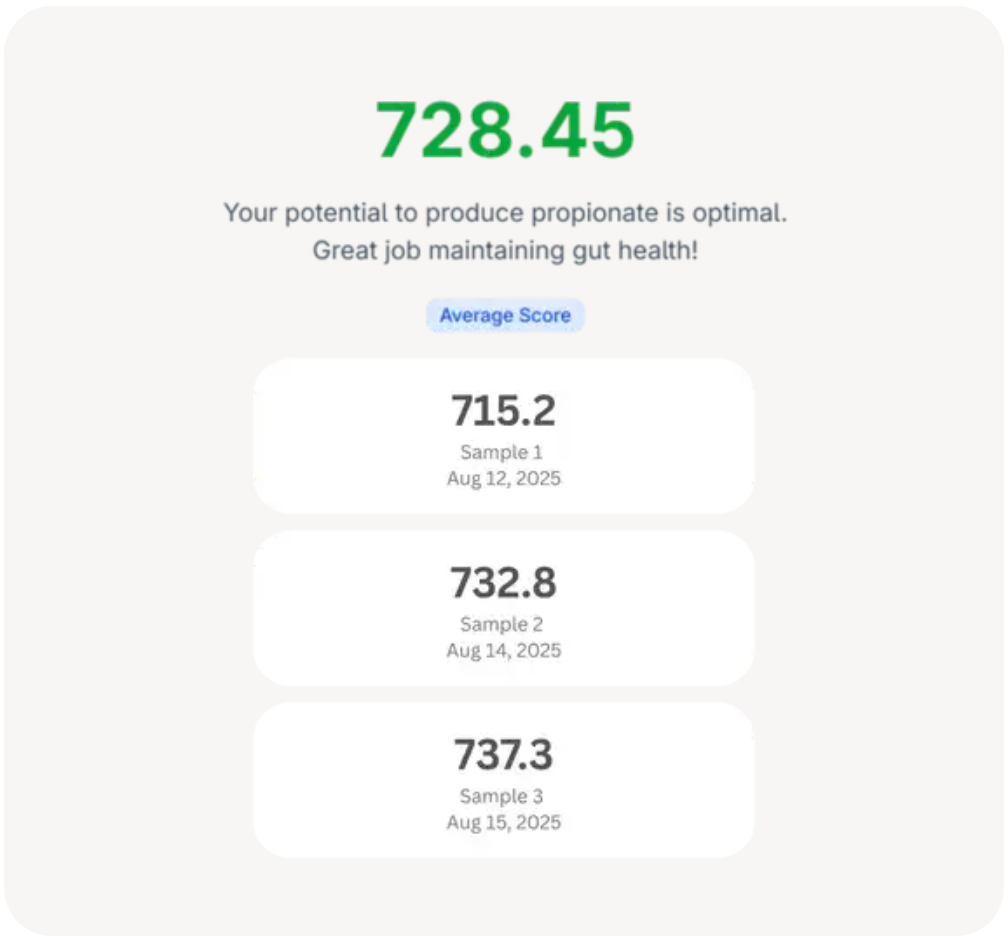
We do this for one reason:
To account for natural day-to-day fluctuation.
By analyzing multiple samples over a defined time window, we move beyond a single snapshot and observe patterns that more accurately reflect how the microbiome behaves over time.
The goal is not to eliminate variation. The goal is to understand it.
Shotgun Metagenomics vs. Limited Target Sequencing
Another important distinction is methodology.
Some consumer tests use 16S rRNA sequencing, which focuses on bacterial DNA only.
Dayhoff Health uses shotgun metagenomic sequencing, which reads all microbial DNA — including bacterial, viral, fungal, parasitic, and archaeal species and strains.
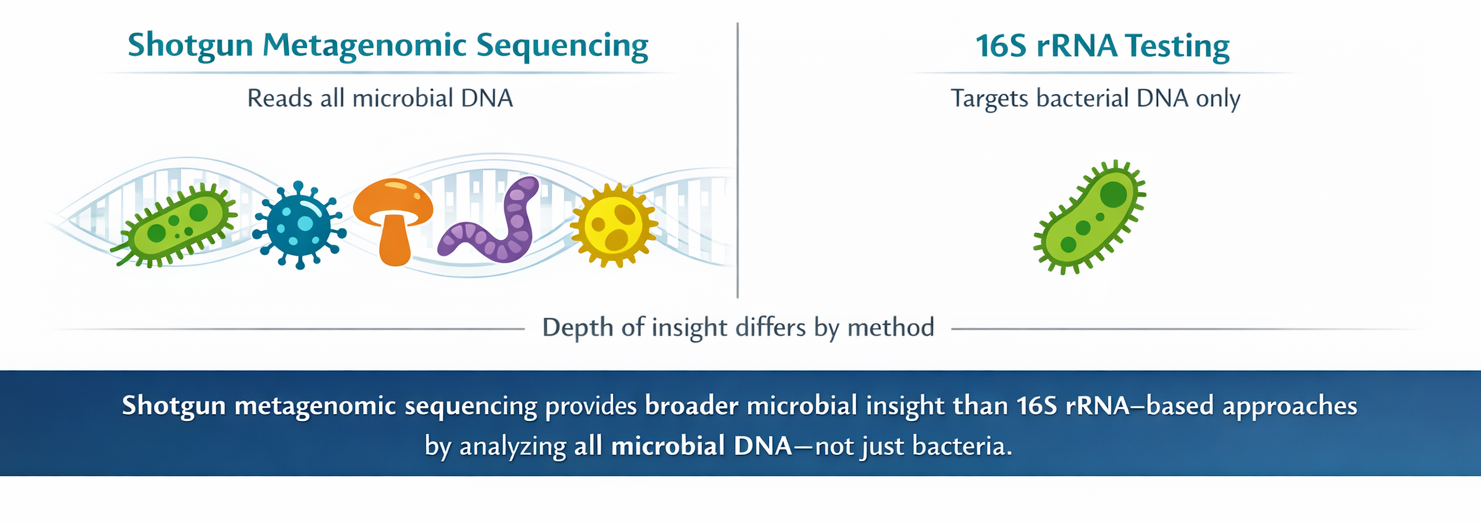
Broader coverage does not eliminate biological fluctuation, but it does provide a deeper ecological context.
When interpretation relies on limited targets and single samples, variation can appear exaggerated.
When analysis incorporates broader data and repeated sampling, patterns become clearer.
Inconsistency Is Not the Same as Invalidity
It’s important to separate the two ideas:
- Biological systems fluctuate.
- Testing approaches may or may not account for that fluctuation.
The recent study that Gizmodo Health references does not prove that microbiome science is unreliable. It demonstrates that methodology matters.
Sampling design, sequencing depth, and interpretation framework matters.
Prevention Requires Pattern Recognition
At Dayhoff Health, we do not use microbiome insights to diagnose disease. We focus on early biological signals that can inform preventive health strategies.
That requires looking for consistent trends — not reacting to a single data point.
Prevention is not about perfection. It is about pattern recognition over time.
A More Nuanced Conversation
Microbiome testing is still evolving, and scrutiny is healthy. But broad claims that “gut tests are inconsistent” risk oversimplifying a more complex reality. The microbiome changes. That is expected. The question is whether a testing approach is designed to account for that change, or ignore it.
At Dayhoff Health, our three-sample protocol exists precisely because we recognize that biological systems are dynamic.
Variability is not a flaw.
It is information — if you measure it correctly.