How Microbiome Insights Support Preventive Health
Preventative Health Starts Before Symptoms
Many health conditions don’t begin with obvious symptoms. They begin quietly, through subtle biological changes that are easy to overlook.
The microbiome, a complex ecosystem of microorganisms primarily located in the gut, is among the earliest systems to reflect such changes. Dayhoff Health exists to help make those early signals understandable, enabling individuals and organizations to make more informed, preventive health decisions over time.
Maggie explains the function of your gut microbiome
What Is the Microbiome?
The microbiome is the collection of trillions of microorganisms, including bacteria, viruses, and fungi, that live in and on the human body, with the largest concentration in the digestive tract.
Research from institutions such as Harvard Medical School, the Cleveland Clinic, and the NIH Human Microbiome Project shows that the microbiome plays a meaningful role in areas including:
- Immune system regulation
- Metabolic function
- Inflammation
- Nutrient absorption
- Gut–brain signaling
Because of its broad influence, the microbiome is often described as a foundational biological system, one that can change long before outward symptoms appear.
Why the Microbiome Matters Even When You Feel Well
It’s common to associate health testing with illness. Preventative health takes a different approach.
Stress, disrupted sleep, irregular meals, and environmental exposure can all influence the microbiome. These shifts don’t always produce immediate symptoms, but they can affect resilience and recovery over time.
In populations with demanding schedules, such as shift workers and first responders, these factors are especially relevant. Long hours, disrupted circadian rhythms, and sustained stress can subtly and cumulatively affect biological systems.
Understanding these changes early creates an opportunity to raise awareness, monitor, and have informed conversations with healthcare professionals before issues escalate.
Subtle Signals Worth Paying Attention To
Changes in the microbiome may be associated with experiences such as:
- Slower recovery after physical activity
- Digestive discomfort or irregularity
- Persistent fatigue or low energy
- Disrupted sleep
- Changes in mood or skin health
Individually, these signs are often attributed to stress or routine disruption. Viewed together, they may indicate that underlying biological systems are under strain. Preventative insight is about recognizing patterns and is not meant to diagnose.
What Influences the Microbiome?
The microbiome is shaped by both early-life factors and ongoing conditions, including:
- Birth method and early nutrition
- Antibiotic exposure (past and present)
- Sleep quality and circadian rhythm
- Stress load
- Diet and environment
Some influences are fixed. Others evolve over time. Understanding your current microbiome provides context for how these factors may be interacting now
How Dayhoff Health Approaches Microbiome Testing
Dayhoff Health provides clinically informed microbiome analysis using advanced sequencing and bioinformatics. Our approach is designed for accuracy, clarity, and long-term relevance.
Key principles include:
- High-resolution analysis that captures a broad range of microbial activity
- Careful sample handling, including controlled freezing, to preserve integrity
- Clear reporting that explains findings without overinterpretation
- Defined boundaries, as we do not diagnose disease or recommend treatment
Our role is to translate complex data into insights you can understand and discuss with your primary care team responsibly.
Designed for Long-Term Understanding
The microbiome is dynamic. Diet, stress, sleep, medications, and environment can all influence it over time.
For participants who choose to opt in, Dayhoff Health can provide updated insights as peer-reviewed research evolves. This keeps microbiome data relevant and part of your longer health record.
Participation in any longitudinal or anonymized data model is optional and governed by transparent consent.
How This Applies to Organizational and Wellness Programs
Many organizations now offer microbiome testing as part of preventative wellness initiatives.
When Dayhoff Health testing is provided through an employer or organization:
- Individual results remain private
- Results are not shared with employers
- The focus is education and awareness, not evaluation
The goal is to give participants access to high-quality information, not to assess performance or health status.
How Microbiome Testing Works
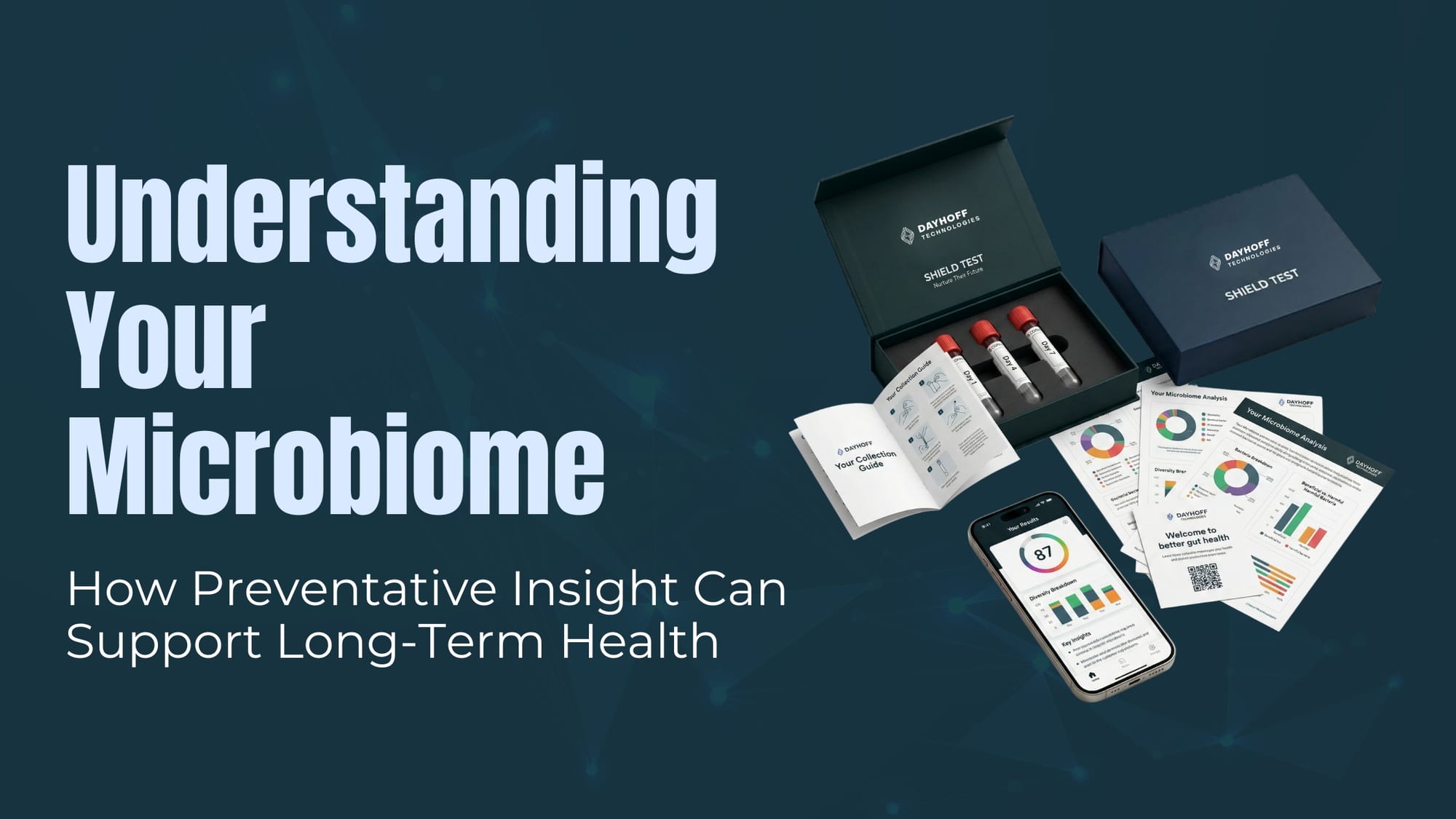
- Receive your test kit: Delivered with clear instructions and secure packaging.
- Collect samples at home: Designed to be straightforward and discreet.
- Laboratory analysis: Samples are processed using advanced sequencing and secure infrastructure.
- Review your report with your primary care team: Results are presented clearly, with context to support understanding.
- Optional future updates: Participants may opt in to receive updated insights as science advances.
Frequently Asked Questions
How often should microbiome testing be done? Testing frequency varies. Some individuals choose periodic testing to understand changes over time, particularly during major lifestyle or schedule shifts.
Can results change? Yes. The microbiome is influenced by diet, stress, sleep, and medications, among other factors.
Is microbiome testing safe? Yes. The process is non-invasive and does not involve medical intervention.
What if my healthcare provider is unfamiliar with microbiome testing? Dayhoff Health reports are designed to be shareable with your clinical care team and aligned with current research, supporting informed discussion with clinicians.
Who should seek medical care instead of testing? Anyone experiencing severe or worsening symptoms, such as unexplained weight loss, persistent fever, or blood in stool, should consult a healthcare professional promptly. Microbiome testing is not a substitute for urgent clinical care.
Common Myths and Clarifications
Myth: All microbiome tests are the same. Clarification: Tests vary significantly in resolution, methodology, and interpretation.
Myth: Probiotics are a universal solution. Clarification: Responses to interventions vary. Understanding individual biology provides better context.
Myth: Gut health only affects digestion. Clarification: The microbiome is associated with immune, metabolic, and neurological systems.
Looking Ahead Towards the Future of Microbiome Science
Research into the microbiome continues to expand, exploring connections to chronic disease risk, mental health, and personalized prevention strategies.
At Dayhoff Health, we monitor emerging research and update our analytical frameworks accordingly, so insights remain grounded in evidence. Preventative health is about understanding.
Whether you’re participating through an organization or exploring independently, Dayhoff Health provides clear, responsible insight designed to support better long-term decisions at your own pace.